
Source Specific Ambient SO2 Monitoring vs. Air Quality Modeling for 1-Hour SO2 NAAQS Designations
Posted: March 26th, 2011
As part of the preamble of the new 1-hour sulfur dioxide (SO2) National Ambient Air Quality Standard (NAAQS), U.S. EPA outlined new NAAQS implementation procedures that will require certain facilities to be evaluated using refined air dispersion modeling with U.S. EPA’s guideline air dispersion model (i.e., AERMOD). U.S. EPA has indicated that a hybrid approach of ambient pollutant monitoring and air quality modeling will be used to determine county-specific NAAQS attainment and nonattainment designations for the 1-hour SO2 NAAQS. As part of this designation process, facilities may be requested to perform site-specific air quality modeling for SO2 to assess the facility’s impact relative to the 1-hour SO2 NAAQS when combined with impacts from other local facilities.
The conservatism built into U.S. EPA’s guideline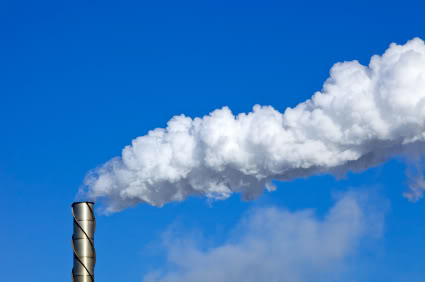 air dispersion model AERMOD combined with the short-term (1-hour average) SO2 NAAQS can, in certain situations, lead to severely over-predicted ambient SO2 concentrations. In locations where there are no ambient monitors to rely on, county-specific NAAQS attainment designations will rely solely on the AERMOD air dispersion model. In addition, the AERMOD air dispersion model will also be used to determine the specific sources that are contributing to modeled exceedances of the SO2 NAAQS. New State Implementation Plan (SIP) SO2 emission limits will likely be imposed on sources identified as contributing to modeled 1-hour SO2 NAAQS exceedances as a mechanism to bring counties into attainment.
Stay tuned to future editions of 4 The Record for articles discussing the pros and cons of conducting source specific SO2 ambient monitoring to assist your state in determining the attainment designation of your county. ALL4’s Ambient Group is responsible for air quality modeling, meteorological monitoring, and ambient monitoring. In addition to conducting NAAQS modeling studies for clients related to the new SO2 standard, our Ambient Group is currently assisting clients perform everything from confidential investigative short-term SO2 ambient monitoring programs to state approved SO2 ambient monitoring programs designed to assist your state in its 1-hour SO2 NAAQS implementation process.
