In response to industry feedback and additional data, the U.S. Environmental Protection Agency (U.S. EPA) has finalized amendments to the New Source Performance Standards (NSPS) and Emission Guidelines (EG) for Existing Sources for the Crude Oil and Natural Gas Source Category. The amendments are in response to petitions for reconsideration of the March 8, 2024, final rule. The April 2026 amendments address the following subparts:
- 40 CFR Part 60, Subpart OOOOb (NSPS OOOOb) – Standards of Performance for Crude Oil and Natural Gas Facilities for Which Construction, Modification or Reconstruction Commenced After December 6, 2022
- 40 CFR Part 60, Subpart OOOOc (EG OOOOc) – Emissions Guidelines for Greenhouse Gas Emissions from Existing Crude Oil and Natural Gas Facilities
Two key aspects have been revised in the rules:
- S. EPA increased the allowable duration of the temporary flaring of associated gas and has allowed for exigent circumstances.
- S. EPA has significantly reduced the net heating value (NHV) monitoring requirements for flares and enclosed combustion devices.
UPDATES TO FLARING REQUIREMENTS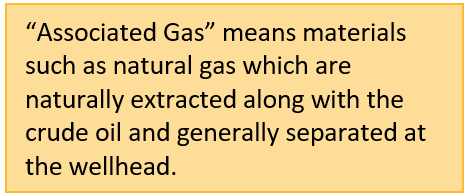
The purpose of the 2024 rules was to reduce emissions of methane and volatile organic compounds (VOC) from affected sources in the Crude Oil and Natural Gas source category. Affected oil and gas facilities located in oil-rich basins where natural gas pipelines and infrastructure are limited or do not exist have historically combusted “associated gas” in flares or enclosed combustion devices. To reduce emissions associated with this practice, NSPS OOOOb included requirements to phase out and eventually prohibit routine flaring of associated gas from new wells. Under NSPS OOOOb, affected facilities are required to route associated gas to market or use it for some other useful purpose. However, the rule allows for temporarily routing associated gas to a flare or control device under certain circumstances. Flaring is limited, depending on the circumstances, to as little as 24 hours per incident. However, industry response indicated that for events involving circumstances such as malfunction or repair, 24 hours would frequently be insufficient due to logistical difficulties. Under the revised rules, temporary flaring (or routing to another control device) of associated gas will be allowed for up to 72 hours for situations where the owner/operator cannot comply with the standard due to malfunctions, including reasons for safety, repairs, and maintenance. However, flaring must cease when the incident triggering flaring has been resolved; so, it is not a blanket allowance for 72 hours of flaring per event.
| Situations where temporary routing associated gas to a flare or control device is allowed | 2024 Maximum Duration | Updated 2026 Maximum Duration |
| During a deviation caused by malfunction, including for reasons of safety | 24 hours | 72 hours (+ Exigent Circumstances) |
| During repair, maintenance (including blowdowns), a bradenhead test, a packer leakage test, a production test, or commissioning | 24 hours | 72 hours (+ Exigent Circumstances) |
| During temporary interruption in service from the gathering or pipeline system | 30 days | 30 days |
| If associated gas does not meet pipeline specifications | 72 hours | 72 hours |
| Exigent Circumstances | N/A | Until equipment malfunction incident is resolved and within 72 hours of the end of exigent circumstances |
The revision also allows for periods of flaring exceeding 72 hours in “exigent” circumstances to resolve safety issues and effect repairs. An “exigent circumstance” is a severe situation that directly restricts an owner’s/operator’s ability to physically access a site with the necessary equipment and personnel to address the equipment malfunction incident which caused the need to temporarily flare. Exigent circumstances do not include internal operational matters that the owner/operator is primarily responsible for and is expected to manage through contingency planning (e.g., personnel shortages due to labor disputes or illness). Once the site is accessible and necessary equipment and personnel are available to resolve an equipment malfunction (i.e., the exigent circumstance no longer exists), the owner/operator must resolve the malfunction and cease flaring within 72 hours. When an owner/operator flares more than 72 hours due to an exigent circumstance, they must keep a written description of the event and what was done to resolve the issue, duration (with start and end times) of the exigent circumstance, and duration (with start and end times) of the temporary flaring (or routing to another control device). This information must be included in their annual report.
UPDATES TO VENT GAS NET HEATING VALUE MONITORING REQUIREMENTS
NSPS OOOOb includes various compliance requirements to ensure that combustion control devices that are being used to meet a 95% emissions reduction standard can continuously demonstrate this level of control of emissions. Under NSPS OOOOb, affected facilities are required to maintain the NHV of the gas sent to flares and enclosed combustion devices (ECD) at or above the applicable limits specified in the rule. Affected facilities are required to demonstrate compliance with these NHV requirements through continuous monitoring of NHV or through periodic performance testing. Associated gas from a well site was assumed to always have a high enough NHV to achieve a 95% destruction efficiency and was therefore exempt from NHV monitoring. For the vent gas NHV sampling demonstration (an alternative to continuous monitoring), the rule required initial sampling twice daily for 14 days and an additional three samples to be taken every five years to demonstrate continued compliance. Industry petitioners argued that, based on historical NHV data, compliance demonstrations are unnecessary most of the time and that low NHV is generally of concern when inert gases are added to process streams, which typically occurs during scheduled situations and is known to the operator. Requirements for states to follow in developing, submitting, and implementing state plans to establish performance standards to limit greenhouse gas (GHG) emissions from existing sources (constructed, modified, or reconstructed on or before December 6, 2022) in the Crude Oil and Natural Gas source category are contained in EG OOOOc. The compliance requirements for combustion control devices specified in EG OOOOc were almost identical to the requirements specified in the NSPS OOOOb. The only difference between the requirements in NSPS OOOOb and EG OOOOc was that for enclosed combustion devices and flares that are air-assisted or steam-assisted, the owner/operator would be required to maintain the minimum NHV of the gas sent to the device instead of monitoring the combustion zone NHV and the NHV dilution parameter. In requests for reconsideration, it was asserted that vent gas sent to flares or enclosed combustion devices generally is already known to meet minimum NHV requirements; therefore, the U.S. EPA expanded the gas streams that are exempt from monitoring due to high NHV content. The monitoring exemption now includes all flare types (unassisted and assisted) and ECDs for both new and existing sources. NHV monitoring will be required for streams where inert gases were added or in the event of operational scenarios where NHV is known to decrease (via either continuous monitoring or the sampling demonstration option). Grab samples can be taken upstream of the control device, provided that the sample is representative of the gas being introduced. In situations where NHV monitoring is still required, the revised regulation will allow breaks during weekends and holidays for the consecutive 14-day sampling demonstration requirements to account for reasonable operational pauses, provided no sampling is spaced more than three operating days apart from the previous sampling day. It will also allow for less than one-hour sampling times in cases where low or intermittent flow makes it infeasible, provided the sampling time used and reason for the reduced sampling time is documented and reported. Owners/operators will need to keep records of and report whether the flare or ECD receives inert gases or other streams that may lower the NHV of the combined stream, and if so, a description of such operating scenario(s).
WRAP-UP
In addition to the major changes overviewed above, NSPS OOOOb and EG OOOOc have been revised to address NHV demonstration deadlines, sampling location and duration of alternative performance testing, flare tip velocities, compositional analyses, calculation methods, combustion zone NHV and NHV dilution parameter operating limits, NHV temperature basis, and compliance timing and deadlines. The changes to NSPS OOOOb and EG OOOOc in the April 2026 revision are seemingly limited in scope but can have significant impact on operations. Please reach out to Brian Taylor or your ALL4 Project Manager with any questions on the revisions or details of the rule.